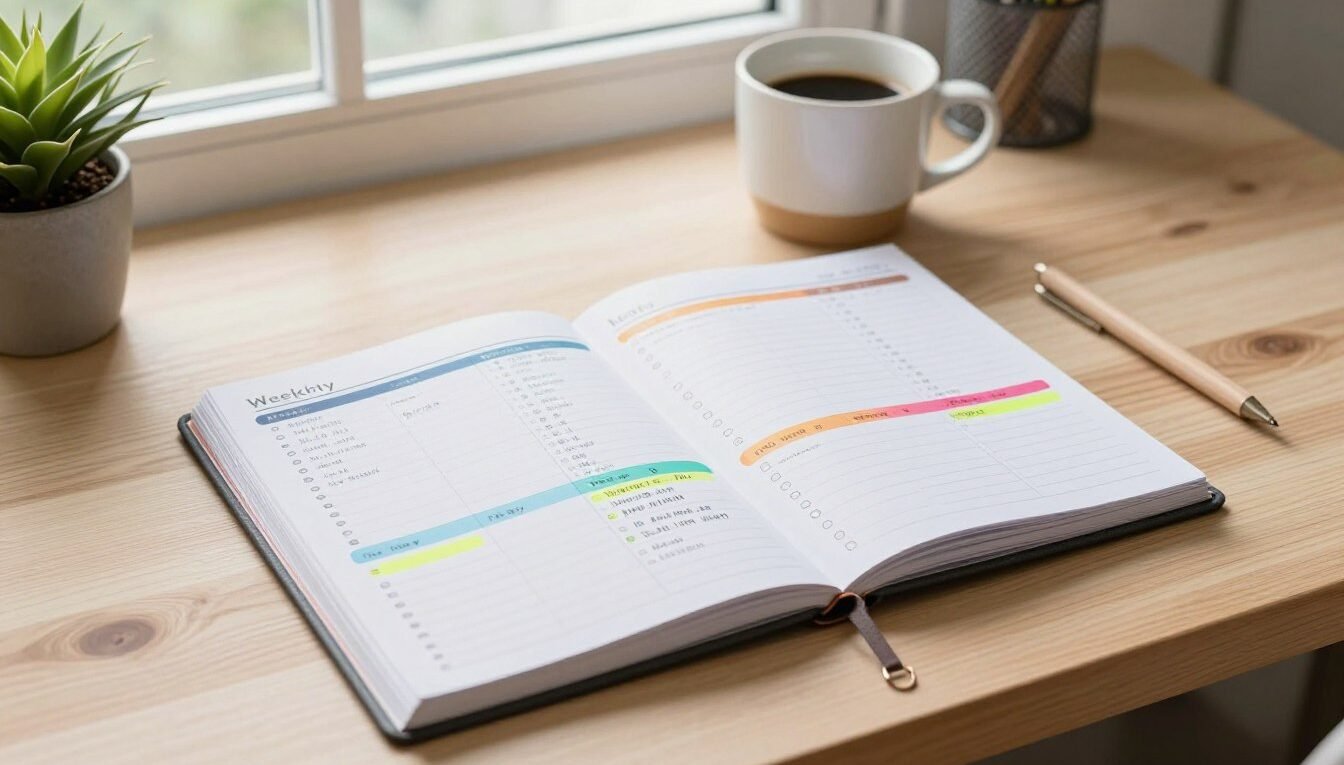
A Simple System to Organize Your Life One Week at a Time
You can tame a busy schedule with a clear, repeatable process. Spend just 30 minutes each week to sketch a simple plan that covers work, home, and goals.
Use a planner or a digital calendar to list key tasks and build a weekly schedule that fits each day. This keeps tasks visible and helps you steer time toward priority work.
When you set aside that half hour, you create structure. A brief review helps you spot clashes and set realistic goals for what matters most.
Follow a few practical tips in this guide and you will have a reliable routine for planning week by week. Small weekly steps lead to steady progress in life and work.
Understanding the Importance of Weekly Planning
When you map the week in advance, small decisions stop draining your energy. Weekly planning builds a steady habit that keeps work and life aligned.
Kristin MacRae, an Organizing & Efficiency Strategist, stresses that planning is a vital habit for maintaining order. Skipping a simple planner review often leads to extra stress and wasted time.
Use a short morning routine to check your calendar and set priorities for the day. That simple step helps you focus on top tasks and protects productive blocks of time.
- Clear weekly schedule that matches business and personal goals.
- Better time management and fewer surprises across the week.
- Fewer stressful moments because tasks are listed and prioritized.
With a reliable planner and a weekly review, you keep priorities visible and maintain steady productivity. This makes it easier for people to handle many things without feeling overwhelmed.
How to Organize Your Week Using Data-Driven Insights
Tracking actual hours reveals patterns that a guesswork list never will. Use simple data from an automated app to move planning from vague goals into measurable progress.
The Role of Time Tracking
Memtime and similar tools record what you spend time on across work and life. That raw data gives a clear view of hours and activities that matter most.
When you inspect logged events, you spot recurring blocks that match deep work or meetings. This helps protect high-value times and trim low-value things.
Reverse-Engineering Your Schedule
Use recent logs to rebuild a realistic weekly schedule. Reverse-engineering shows when projects and tasks fit best in your days.
- Compare tracked hours with planned tasks to spot gaps.
- Block morning slots if data shows high focus then.
- Adjust the planner or calendar after each review for steady progress.
This method removes guesswork and produces a weekly planning habit that reflects real performance. Keep tracking, review weekly data, and refine the plan for better productivity.
Establishing Your Core Weekly Goals
Pick three core goals each week and let them guide daily choices. Limit keeps focus tight and helps you measure progress without overwhelm.
Begin the session by listing top priorities. Use the MoSCoW method to mark Must-dos, Should-dos, Could-dos, and Won’t-dos. This filters your to-do list so you work on important tasks first.
Break projects into short tasks that fit a single day. Kristin MacRae advises that goals be realistic so you can finish them within a session. Small wins build momentum for bigger projects and life balance.
Note that 46% of 316 wikiHow readers named clear boundaries as vital for work-life balance. Set limits on meetings and deep work hours in your planner. Make sure you protect those blocks of time.
- Set three weekly goals that map to long-term projects.
- Use MoSCoW to rank tasks and prune low-value things.
- Turn goals into a daily schedule with realistic task loads.
- Review progress at the end of the week and update the plan.
Implementing Time Blocking for Maximum Efficiency
Block your day into focused chunks and the clutter of decisions fades. Time blocking gives structure for work and personal activities. It helps you set clear hours for deep focus and quick tasks.
Incorporating Buffer Time
Build short buffers between blocks so events do not derail the whole schedule. Small gaps absorb delays and let you reset without stress.
- Time blocking assigns specific hours for tasks, raising daily productivity.
- Make sure to include buffer time for unexpected events during the week.
- Use a planner or calendar to block hours and protect focus.
- Plan activities in advance to steady your weekly schedule and reach goals.
- Dedicate each block to clear tasks so work and rest stay balanced.
Follow this simple plan and your tasks fit real times, not guesses. A small weekly review keeps the plan aligned with real hours and reduces stress while you plan week ahead.
Managing Energy Levels and Daily Priorities
Match tasks with natural energy peaks to get more done in less time. A simple check of your morning energy helps pair important tasks with high-focus hours. This makes planning more realistic and lifts productivity for the whole week.
High-Intensity Work Periods
Block your strongest hours for deep work. Reserve these times for tasks that demand focus and creativity. Kristin MacRae recommends ranking your to-do list by priority so important tasks get done first.
Batching Similar Tasks
Group related work into a single session. Batching cuts switching costs and reduces fatigue.
- Answer messages in one block each day.
- Schedule routine admin in low-energy hours.
- Keep creative work in long, uninterrupted periods.
Themed Days
Assign themes for days so people know what to expect. A theme helps you set weekly goals and align the schedule with priorities. End each day with a quick review of hours spent and next-day priorities.
Selecting the Right Tools for Your Planning System
The right mix of paper and apps makes it easier to keep goals visible across busy days. Pick a planner that gives a clear view of your schedule and appointments.
Erin Condren planners are a strong option if you want premium paper and customization like interchangeable covers. A physical planner pairs well with a digital calendar for time-sensitive alerts.
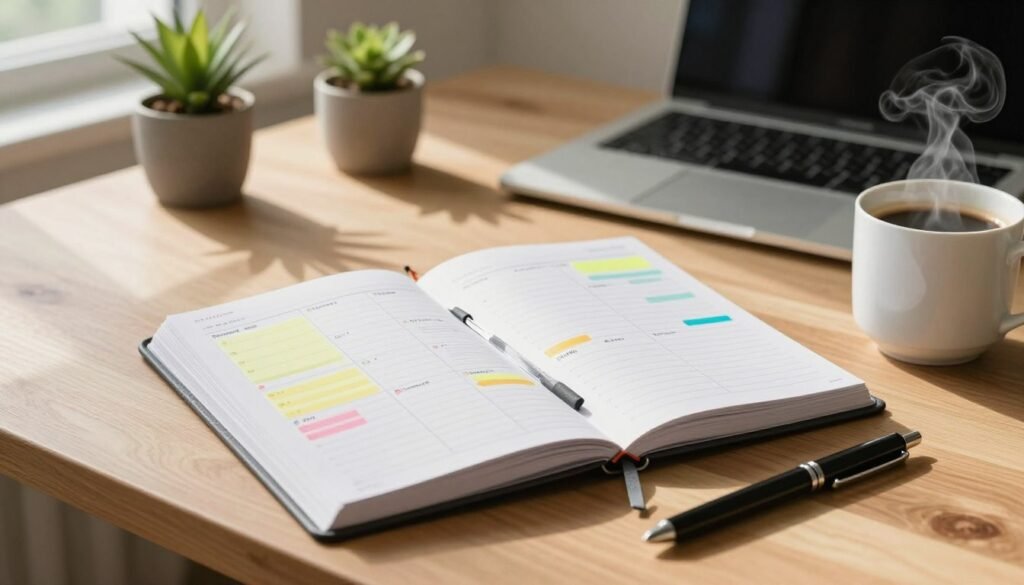
- Choose a planner that fits your method and daily routine.
- Use color-coding and stickers as creative ideas for tracking tasks and goals.
- Combine paper pages with app reminders for reliable time management.
Keep the system simple so you use it every day. Small, consistent checks of the plan improve productivity and help you balance work and personal tasks across the week.
Conclusion: Sustaining Your Productivity Habits
Consistent weekly checks turn good intentions into lasting change. Use this habit to keep priorities visible and boost productivity without adding stress.
Spend a short session with a planner or calendar each day that matters. Weekly planning helps set goals, assign tasks, and protect focused time so your schedule reflects real life.
With 69,529 readers already using these tips, you can make sure progress stays steady. Review projects, adjust weekly goals, and keep the plan flexible. This small habit helps people reach the top of their game and find long-term success.