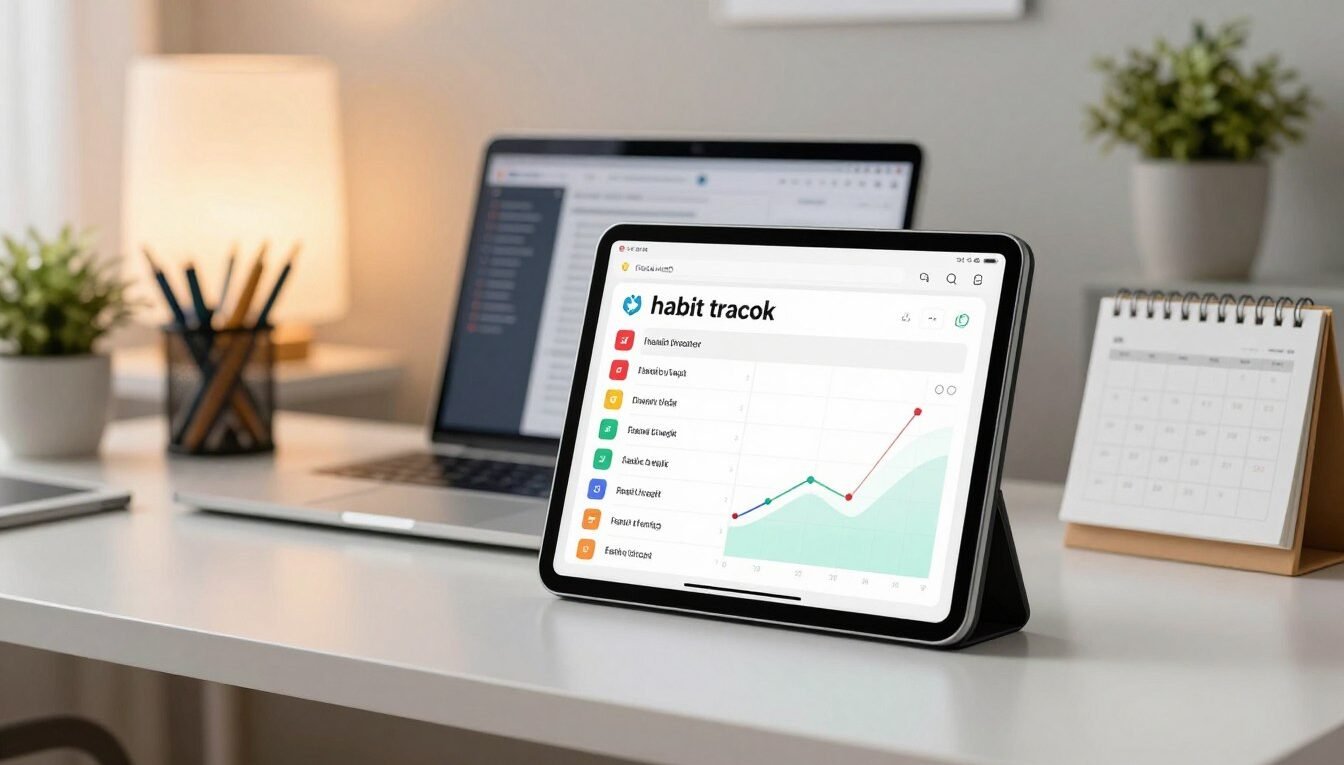
Do Habit Trackers Actually Work? What the Research Says
You want clear proof that the small actions you repeat each day lead to real change. Research and practical examples show that measurement gives you that proof.
Chef Gabrielle Hamilton uses tasting as immediate feedback to refine recipes. James Clear, in his book Atomic Habits, points out that many behavior changes lack instant feedback, which makes them hard to sustain.
Studies illustrate the gap. Meditating for 16 days may not remove stress at work right away, and that delayed result blurs your sense of progress. Recording each day in a journal or on a page creates a visible streak you can study.
Using a tracker or simple tracking method gives you a tangible way to see progress over time. That evidence is one of the main reasons high performers keep a routine and measure their actions to boost productivity and long-term results.
Understanding the Science of Habit Formation
Your brain quietly converts repeated actions into fixed routines over time.
Researchers estimate that over 40 percent of daily actions are automatic rather than deliberate. That shift to automaticity frees mental space, but it also makes certain behaviors stubbornly persistent.
The Role of Automaticity
Automaticity means a cue triggers a routine with little thought. Once a pattern is encoded in brain circuits, it runs on its own. That explains why willpower alone often fails.
Why Habits Stick
Some facts help you plan better changes:
- Charles Duhigg notes that many daily actions are automatic, not choices.
- Stephen R. Covey’s book taught millions how to install useful routines.
- MIT researchers say old patterns rarely vanish, so you must redirect them.
To build habit that serves you, pick clear cues and small wins. Over time, those routines will boost your daily productivity and reduce reliance on sheer effort.
The Core Habit Tracker Benefits for Your Daily Routine
A simple daily log can turn vague intentions into measurable progress. When you use a habit tracker, you create a clear, visual record of how close you are to key goals.
That record builds accountability. On low-motivation days, a visible streak prompts you to act, so your routine survives bumps in the road.
Think of the system as a short-term coach. It helps you measure performance and keep your daily work on schedule. Over time the history shows where you improved and where to adjust.
- Visual proof of progress for each goal.
- Simple accountability that nudges you to track habits daily.
- A way to spot trends in your time and productivity.
- Clear records that help you refine your routine and goals.
- Portable monitoring so you can maintain momentum at home or at work.
Use the tool to focus on the process rather than instant outcomes. Small, consistent steps add up, and a reliable tracker supplies the instant feedback that keeps you moving forward.
Why Visual Feedback Drives Behavioral Change
Visual cues make effort visible, and that clarity changes how you act each day.
The Power of Immediate Satisfaction
When you mark a box or an X on a calendar, you get a small reward right away. That quick reward helps the brain link action to outcome, so you feel motivated to repeat the thing tomorrow.
Research backs this up. A study of more than 1,600 people found those who kept a daily food log lost twice as much weight as those who did not.
- Tracking your behavior gives clear, measurable results over time.
- A visible streak on a calendar feels good and supplies the dopamine hit that fuels success.
- The visual cue reminds you to act, making the new habit part of your daily routine.
- Focusing on streaks prevents all-or-nothing thinking and boosts productivity toward long-term goals.
Choosing Between Analog and Digital Tracking Methods
Picking the right format to record your progress can determine whether you stick with changes long term. You want a system that fits your rhythm, not one that creates extra work.
Benefits of Paper Journals
A paper journal gives you a tactile way to mark each day. Jerry Seinfeld’s simple calendar method—don’t break the chain—is a classic example of how a visible streak boosts consistency.
Ryder Carroll’s Bullet Journal system offers flexible page layouts for creative tracking. You can place a printed calendar on a closet door or dedicate a page in your journal as a constant cue.
Digital App Advantages
Digital apps add gamification and reminders that can help sustain momentum. They sync across devices, so your tracking stays with you no matter the place.
Whether you choose paper or an app, the key is daily use. Start with a free printable from a productivity blog or try an app for a week to see which way helps you track and maintain progress.
- Paper: visible, customizable, low-tech.
- Digital: reminders, incentives, portable.
- Choose the one you will actually use every day.
How to Start Tracking Your Most Important Habits
Begin with actions you can do in two minutes or less to build steady momentum. James Clear’s Two-Minute Rule makes it easy to scale a new habit into your day. Pick tiny tasks you can finish in a few minutes and mark them off when done.
Limit your list to three or four priorities so you can track habits every day without overwhelm. Examples: read one page, do one push-up, or meditate for one minute each morning after coffee.
Place your habit tracker in a prominent place — a phone home screen or a calendar on the wall. Link tracking to an existing routine so marking progress becomes automatic.
- Choose 3–4 goals to focus on each week.
- Use two-minute tasks to reduce friction and ensure success.
- Track exercise, calls, journaling, or a one-page task each day.
- Celebrate small streaks and prioritize consistency over perfection.
Start today, keep entries short, and review progress after seven days. That steady approach improves productivity and makes long-term success far more likely.
Strategies for Building Sustainable Daily Routines
Start your day with one simple action that signals focus and sets momentum. Schedule your next day the night before so you wake prepared and use time well.
Keep your morning short and predictable: a healthy breakfast, quick exercise, or five minutes of planning gives structure. At home or at work, pick small, repeatable tasks you can do in minutes.
Use practical tips to remove friction. Lay out clothes the night before, limit screen time before bed, and block a 30-minute reading slot each week. These small choices shape your life without draining willpower.
- Identify 1–2 key habits to focus on this week.
- Keep actions short so you can show up every day.
- Use a simple tracker to record progress and spot patterns.
- Celebrate small wins to maintain productivity and momentum.
By narrowing your focus and designing easy routines, you make lasting change more likely. Sustainable change is about consistency, not perfection.
Overcoming the Resistance to Consistent Tracking
You can beat resistance by shrinking what you track to a single, clear action. Small scope reduces friction and makes recording feel doable on busy days.
Limiting Your Tracking Scope
Pick one priority and track it every day. It is better to mark one item consistently than to log many items sporadically.
Use a simple prompt: “After I [CURRENT HABIT], I will [TRACK MY HABIT].” For example, after a sales call you immediately mark the box so you do not forget.
- Keep your list short to cut mental load and boost consistency.
- Treat the tool as information, not judgment — a missed entry is data, not failure.
- Even short periods of tracking reveal patterns that help you improve.
When you tie recording to an existing routine, tracking becomes automatic. That steady evidence helps you stay honest and learn from real results.
Recovering Quickly When Your Habits Break Down
Slip-ups happen; how you respond in the next 24 hours decides whether you keep momentum.
Follow a simple rule: never miss twice. If you skip one day, return to your routine immediately. A missed session is an accident. Two misses in a row can start a new, unwanted pattern.
Use your habit tracker to visualize recovery. Mark the missed day, then note how fast you resume. Seeing a repaired streak on a calendar feels good and helps you measure progress.
- Accept one slip but act the same day to avoid chains of misses.
- Plan quick fixes for travel or emergencies so your routine survives disruptions.
- Track how many days it takes to return — that data improves long-term success.
Remember: you are building a lifestyle, not racing to a finish line. Focus on steady tracking and small recoveries. That approach keeps your habits flexible and your goals within reach.
Determining the Ideal Duration for Habit Tracking
Deciding how long to follow a new routine often matters more than the routine itself.
A well-known study found an average of 66 days to form a habit, but individual results vary widely. Some tasks take weeks; others need months.
Track for as long as you want to keep the behavior. The point is steady progress, not a fixed finish line.
Use your tracker to watch how small steps become automatic. When a task feels easy, you can stop logging it and shift focus to a new goal.
- Follow the 66-day idea as a guide, not a rule.
- Track every day while you build momentum and measure progress.
- Keep records until the action feels natural, then reallocate effort.
- Use short reviews to check if your goals still matter over time.
Building habit patterns is ongoing. Treat tracking as feedback that helps you refine time, scope, and priorities as your habits evolve.
Advanced Techniques for Long Term Success
Small refinements to your daily system can compound into major wins over months and years.
Use gamification to make routine work engaging. Apps like Habitica turn chores and goals into quests, which can boost consistency and motivation.
Keep a dedicated journal page for complex tasks. For example, tracking 500–1,000 words per day for a book gives clear records of progress and time spent.

Link a new habit to something you already do each morning or after work. This pairing helps you get started with minimal friction and keeps routines steady.
- Try a commitment contract (StickK) to add stakes for key goals.
- Log minutes of practice for language, exercise, or sleep to measure real change.
- Review weekly to see which efforts move your life and work forward.
Keep your approach simple. Whether you use an app, a page in a journal, or a paper list, focus on the few things that matter. That clarity helps you maintain streaks and sustain long-term success.
Conclusion
Consistency, not perfection, is the engine behind lasting change. Small, visible wins give you momentum and clear data to learn from. That steady feedback and the tangible benefits of tracking help you stay focused when motivation dips.
Document your progress in whatever form fits your life. A habit tracker on your wall, a simple app, or a page in a journal will work if you use it daily. The right tracker is the one you keep returning to.
Start small, review your results, and celebrate repaired streaks. Over time, the system you build will shape the person who shows up for their goals each day.