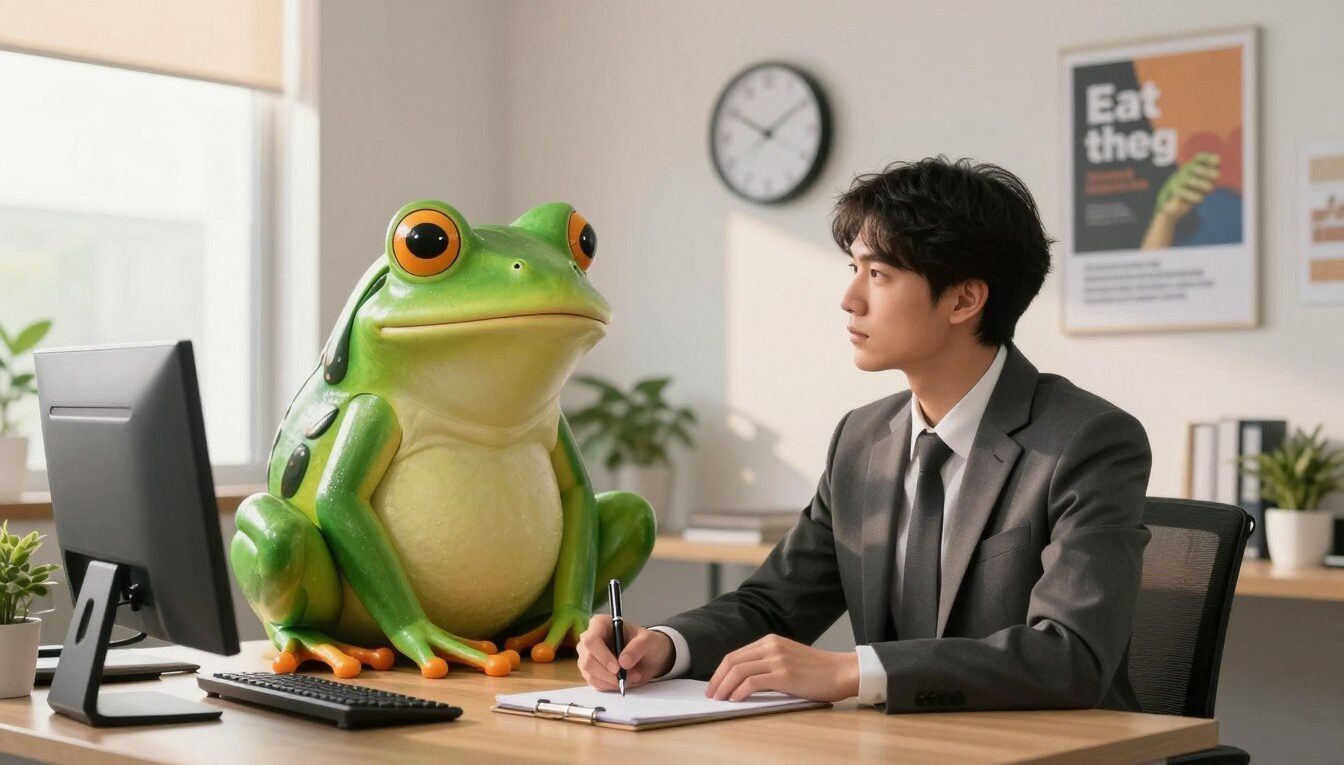
Eat the Frog: Why You Should Tackle Your Hardest Task First
Start your day by handling the toughest task on your list. The eat the frog method asks you to pick one demanding item from your to-do list and do it first thing in the morning.
When you face that large task early, you cut through procrastination and protect peak focus hours. This approach, popularized by Brian Tracy, helps you manage time and boost productivity for the rest of your work day.
Use simple steps to identify your frog: choose the task with the biggest impact, break it into small actions, and commit a focused block of hours to finish the first piece.
By adopting this way of task first planning, you clear mental clutter and gain momentum. You will find team output improves too, since your priorities set a steady pace for others.
Understanding the Eat the Frog Method
Begin each workday by tackling the single task that will move your goals forward most. When you act first thing morning, you protect peak focus and reduce decision fatigue early in the day.
This approach frames a big, high-impact job as your main priority. By choosing one key task from your list, you avoid spending time on low-value things.
Committing to eat frog work also signals reliability to your team. When you finish a demanding item before other chores, you lower stress and free bandwidth for creative work later in the day.
- Identify the one task that advances long-term goals.
- Break that task into small, timed actions to start quickly.
- Protect a focused block of time to complete the first piece.
Mastering this way improves overall time management and productivity. The technique helps you beat procrastination by aligning your hardest work with your best mental hours.
The Origins of the Productivity Metaphor
A crisp piece of advice about biting off a difficult job before anything else shaped a broad productivity practice. That proverb framed a simple truth: doing a hard task early frees up your time and focus for the rest of the day.
Mark Twain’s Role
Mark Twain is often linked to the memorable line about eating a frog first thing in the morning. His phrasing captured how confronting an unpleasant task early makes everything that follows feel easier.
Brian Tracy’s Contribution
Brian Tracy turned that idea into a practical system in his 2001 book, which guided readers to rank tasks and protect focused morning blocks. His version added steps for time management and team coordination.
- Twain provided the witty seed of the metaphor.
- Tracy structured it into a repeatable productivity approach.
- The core advice helps you prioritize the biggest frog on your list first.
Why Tackling Your Hardest Task First Works
Tackling your toughest work when your mind is freshest multiplies its impact for the rest of the day. You align peak energy with high-complexity tasks, so you solve harder problems faster and with better focus.
Starting with a major task builds momentum. Once a big item is done, smaller tasks feel easier and you waste less time shifting gears.
Completing that difficult task early also cuts stress. You remove a major source of dread and free mental space to manage other priorities.
- You avoid decision fatigue by knowing what to work on first.
- One focused block limits multitasking and boosts productivity.
- Consistent morning wins drive steady progress toward long-term goals.
Research shows many people have better cognition in the morning, so this way improves time and task management. Use this approach as a practical way to lower procrastination and increase motivation across your day.
How to Identify Your Daily Frog
Identify the one item on your list that delivers the most impact, then commit your sharpest hours to it. This choice shapes your morning and sets a clear priority for your day.
Distinguishing Important Tasks from Urgent Ones
Use a simple priority matrix to sort your to-do list. Mark tasks that drive long-term goals as important. Mark routine items and last-minute requests as urgent but often low-impact.
The ideal frog task takes one to four hours. That span lets you dive deep without burning out. If a job needs more time, break it into smaller task chunks you can finish in a morning block.
- Match tasks to your team OKRs to spot true priorities.
- Choose the single task that moves a key metric or removes a major bottleneck.
- Schedule that item for your best hours to protect focus and boost productivity.
When you pick the right frog, you stop being merely busy and start making meaningful progress. This approach improves time management and clears space for creative work later in the day.
Preparing Your Workspace for Deep Work
Create a launch-ready workstation tonight so you can jump straight into priority work tomorrow. A quick setup reduces friction and guards your best hours for focused output.

Clear clutter from your desk and close unrelated tabs. Turn off phone alerts and mute nonessential apps. These small moves cut interruptions that derail long tasks.
Signal your brain that focused work begins now by arranging tools for one task only. Place notes, files, and a timer nearby. Having a dedicated layout speeds transitions into deep concentration.
- Prep materials and files the night before to start your morning fast.
- Block a fixed span of uninterrupted time for your top task.
- Keep a short checklist so setup consumes minimal minutes.
Consistent workspace habits improve task management and overall productivity. When you remove friction, you raise the odds of eating frog work within planned hours each day.
Strategies for Successful Implementation
Decide on one key win for your day, then protect an uninterrupted block to move it forward. Clear goals and simple routines make this way repeatable and sustainable.
Defining Your Goals
Write one clear outcome that matters to your week. Use the 80/20 rule to spot the 20% of tasks that yield 80% of results. Mark that outcome as your priority on your to-do list.
Planning Your Tasks
Break the priority into small, timed steps you can finish in a morning block. Use the ABCDE approach to label A tasks as must-do, B as should-do, and so on.
- Plan the night before so you start first thing morning.
- Block focused hours on your calendar with a reliable scheduling tool.
- Delegate or eliminate low-value items that steal time.
Maintaining Focus
Remove distractions and track short cycles of work and rest. Build a habit by repeating this routine daily; steady wins boost motivation and lower stress.
Overcoming Common Mental Resistance
You will meet a wall of resistance when a high-value task sits at the top of your list. That push often looks like procrastination, distraction, or a small flurry of busywork.
Acknowledge that dread is normal. Many people feel anxious when they see priority tasks. Naming the feeling lowers its power and makes starting easier.
Use small, timed steps to begin. Commit just 10 minutes to the most important task. Once you start, momentum and focus often follow.
- Remind yourself the discomfort is short; results last.
- Use positive self-talk to reframe a hard task as a chance to grow.
- Practice this routine daily to shrink resistance over time.
When you face and finish a big frog first, you protect your time and strengthen mental toughness. That consistency raises your productivity and makes future tough tasks feel simpler.
When to Adapt the Technique
Match your toughest task to the hours when your focus is strongest. Not everyone peaks at morning, so tailor your plan to your natural rhythm.
Aligning with Your Natural Energy Levels
If you are sharper later in the day, schedule your main frog for that block. Night owls often hit high productivity in the afternoon or evening, and that timing can work better for long tasks.
If your role forces frequent reprioritization, combine this approach with time blocking. Reserve protected hours for deep work and keep short slots for urgent items.
- Understand your chronotype and map your best hours.
- Use short wins before a big task if pressure feels counterproductive.
- Adjust schedule when stress or results show the need for change.
Flexibility keeps this way useful for long-term management. Adaptation helps you place hard tasks when you can deliver high-quality work and keeps teams aligned without added stress.
Exploring Alternative Productivity Frameworks
If one framework does not suit your style, you can explore other proven systems to shape your day. Trying a few gives you practical options for handling complex tasks and keeping momentum.
Consider short-focus cycles like the Pomodoro technique. It breaks work into 25-minute intervals and helps you stay sharp on difficult tasks. Use a timer and short breaks to guard attention.
Getting Things Done (GTD) helps you capture all tasks in a trusted list. That reduces mental clutter and makes prioritizing easier. Combine capture with weekly reviews to keep your list current.
- Time blocking: reserve fixed hours of your day for focused categories of work.
- Pomodoro: 25-minute sprints for sustained concentration on one task.
- GTD: a system to collect, process, and review tasks so nothing slips.
Mixing approaches often works best. You might use GTD for intake, time blocking for scheduling, and Pomodoro for heavy effort. Regularly evaluate which tools cut stress and increase output.
By sampling frameworks, you build a personalized productivity toolkit that fits your rhythm. Keep what helps you deliver more high-impact work across your day and refine it as your needs change.
Conclusion
Pick a top-priority item and make a short plan so you can start with purpose. Use your to-do list to mark one important task first thing in the morning. This simple eat frog method, inspired by Brian Tracy, helps you get done what matters and clears time for other work in your day.
Adapt the technique to fit your rhythm. Use ABCDE, time blocking, or short steps to protect focus and stop procrastination. Share priorities with your team, and treat this as a tool for better time management and lower stress. Start today, stick with small wins, and watch your productivity and motivation grow.