
How to Declutter Your Home and Feel Lighter Every Day
You have likely felt the drain of a crowded space after a move or a new baby. Mimi Bogelund launched The Organised Life & Home in 2018 after training with Marie Kondo in San Francisco. Her approach treats visible mess as a mirror of mental clutter.
By setting aside small blocks of time, you can tackle items without overwhelm. This steady rhythm makes the task manageable and helps you keep progress steady each day.
Finding a sustainable way to manage possessions stops the weight of excess. Professionals note that clearing clutter often restores calm and supports mental well-being.
With simple routines and focused effort, reclaiming your house becomes an achievable goal. The joy of living in a tidy space often outweighs the initial work, and decluttering can reshape life for the better.
Understanding the Mental Impact of Clutter
A crowded living area often makes simple tasks feel exhausting and small decisions heavy.
Physical mess can mirror mental strain. When rooms are full of things, your attention splinters. You may feel constant low-level stress and find it harder to relax or focus.
The Link Between Physical and Mental Space
Clutter steals calm. Studies and organising professionals note that visible disorder affects mood and productivity. Years of holding onto boxes or stacks of books can keep you stuck in routines that do not serve your life.
Recognizing When You Need Help
Asking for support is practical, not weak. The Association of Professional Declutterers and Organisers (ADPO) offers resources for people overwhelmed by possessions.
- Professional help can restore order and reduce stress.
- Mimi Bogelund charges £35 per hour with a three-hour minimum for hands-on sessions.
- Clearing space often frees you to host friends and enjoy your place again.
How to Declutter Your Home Using Proven Methods
Using a clear method helps you move from chaos to calm one room at a time. Two popular approaches have guided many people toward lasting order.
The KonMari method, from Marie Kondo’s book, asks you to keep items that spark joy. You handle categories rather than chasing a single messy corner. This keeps the process focused and meaningful.
The ski slope method, created by Anita Yokota, has you work corner to corner. That steady sweep stops you from bouncing around and feeling overwhelmed.
- KonMari helps you sort by feeling and value, not just use.
- Ski slope gives a reliable, room-by-room workflow for cleaning and sorting.
- Both methods cut common mistakes and keep the task manageable for busy lives.
Whether you start in the kitchen or a spare room, pick one method and follow it. A consistent process makes maintenance easier and protects your homes from creeping clutter over time.
Preparing Your Space and Supplies
Begin by carving out a clear workspace and gathering the tools that will keep you moving forward. A simple setup reduced distractions and let you focus on small wins.
Essential Tools for the Process
Collect trash bags, donation boxes, labels, and cleaning cloths before you start. This small step kept sorting fast and avoided repeated trips across rooms.
Set a timer for 20 minutes each day. Short sessions are one of the best tips for keeping momentum without burning out on bigger tasks.
- Designate a storage spot for donation boxes so items leave your space fast.
- Plan enough time each week for focused work; pick specific tasks and finish them.
- Follow a simple method for arranging supplies so the process stays efficient.
When your tools are ready, you can focus on clearing real space. That preparation saved time and made the entire decluttering process more rewarding.
Categorizing Your Belongings for Success
Gather all clothes, books, papers, and kitchen pieces so you can see what you really own. Working by categories makes the process clear and fast.
Marie Kondo advised that the brain prefers one category at a time. When you finish one category, you stay focused and avoid decision fatigue.
- Group similar items like clothes, books, or paper in a single spot. This reveals value and purpose for each thing.
- Use drawer dividers such as Ikea Skubb to maximize storage in existing furniture and keep laundry and small stuff tidy.
- Sort kitchen gadgets and tools together so duplicates are easy to spot and you can get rid of what you do not need.
- Clear drawers and shelves before returning items. Giving each item a marked home simplifies daily routines.
By following these steps, you create space that works for daily life. The task becomes a repeatable way to maintain order.
Tackling the Entryway and Mudroom
Start by treating the entry as a tiny command center that must work for you. This small part of the house sets first impressions and affects daily routines.
Simplifying Outerwear and Shoes
Sort outerwear and shoes by season and use. Remove clothes and pairs that no longer fit or sit unused in boxes.
Keep a limited set of everyday coats and three pairs of shoes near the door. That reduces clutter and speeds up morning tasks.
Establishing Drop Zones
Create clear drop zones with baskets, hooks, and a small shelf. Give keys, mail, and bags a permanent place so loose paper and things do not pile up.
- Use labelled baskets for mail, laundry, and outdoor gear.
- Keep one drawer for small items like gloves and masks.
- Schedule a weekly sort of boxes and paper to avoid mess.
Simple storage choices make this room work harder for you. A tidy entry creates calm and helps keep the rest of the home organized.
Refreshing Your Bathroom Essentials
Bathrooms often collect half-used bottles and forgotten tubes that crowd counter space.
Set a regular process for sorting items. Group things into clear categories like skincare, dental care, and hair products.
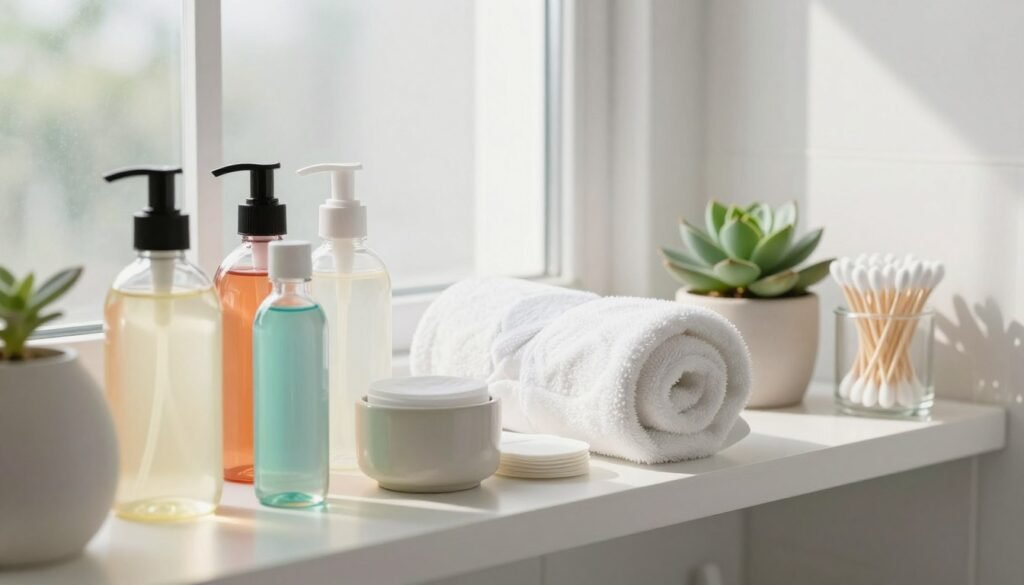
Use drawer organizers so daily items stay visible. That storage method keeps counters clear and saves time each morning.
- Check expiration dates and discard old lotions and samples.
- Keep cleaning and laundry supplies in one labeled spot.
- Store extra boxes and spare toiletries where they are easy to reach but out of view.
- Wipe cabinets and drawers every few months as part of a simple cleaning routine.
Following a steady way for refreshing this room reduces buildup. A short session every few months protects space and makes daily care faster.
Streamlining the Kitchen for Daily Flow
Small adjustments in the kitchen can cut minutes off meal prep and ease daily tasks. A clear plan for counters, cabinets, and pantry creates more usable space and less stress.
Clearing Countertops
Remove items you do not use every day from sight. Keep only a small set of tools, like a coffee maker or a cutting board, for daily use.
Store extras in cabinets so the counter becomes a clean prep surface. Limit textiles: keep three or four dish towels in rotation to avoid an overstuffed drawer.
Organizing Cabinets by Usage
Group dishes, pans, and glassware by how often you reach for them. Put daily plates on lower shelves and special pieces higher up.
Label shelves or use clear bins for similar items. This storage approach saves time and makes each room of the kitchen work more efficiently.
Maintaining Pantry Inventory
Check pantry stock once a week and remove duplicates or expired goods. A simple list helps you plan meals and prevents wasted purchases over the year.
- Rotate items by date so older goods are used first.
- Create categories for baking, grains, and snacks to find things fast.
- Use clear containers for staples so you can see amounts at a glance.
With these tips, you spend less time hunting for items and more time enjoying the house and meals with friends.
Managing Toy Collections and Play Areas
Small systems keep toys from overwhelming shared spaces and daily routines.
Start by sorting items into clear categories so you see what children actually own. Group by type: action figures, art supplies, books, and dress-up clothes. This reveals duplicates and broken stuff fast.
Use clear storage boxes placed at child height. Kids can spot their things and join cleanups. Rotate sets every few weeks to keep play fresh and limit clutter in living areas.
- Discard or donate broken and outgrown items to free space for favorites.
- Label boxes and drawers so every item has a consistent spot.
- Set a short tidy-up time each day so maintenance fits into family life.
Teaching kids to care for their items builds responsibility. A simple method for storage keeps the play room usable for everyone and makes daily life in the home calmer.
Creating Calm in Living Spaces
Simple edits to surfaces can turn a busy room into a restful place you want to spend time in. Start with one surface and decide what belongs there by purpose, not habit.
The Power of Clear Surfaces
Clear surfaces are the fastest way to reduce visual clutter and make a space feel ordered. When countertops, tables, and shelves are tidy, favorite books and furniture stand out.
- Remove superfluous decorative items and get rid of duplicates so key pieces add warmth and meaning.
- Use baskets for storage to hold small items like remotes and chargers and keep surfaces free.
- Check each room regularly so every item has a purpose and contributes to calm spaces.
- Spend a few minutes at the end of each day resetting surfaces; this small task keeps the whole home inviting.
These simple tips help you treat items thoughtfully and keep living areas restful. A clear surface creates breathing room for relaxing and enjoying the day.
Implementing Systems for Long-Term Order
A few steady rules will change how your space behaves day after day.
Pick a simple method and assign each room a clear process. Use a one-in-one-out rule for boxes and storage so possessions do not creep back over years.
Schedule short weekly tasks: a laundry sort, a paper sweep, and a kitchen tidy. These small actions save time and keep order without huge effort.
- Limit storage by shelf or drawer so every item has a home.
- Play the Minimalism Game to remove 465 things in 31 days and build decluttering habits.
- Make routines that people in your house can follow each day and each week.
When systems are clear, cleaning and maintenance become part of life. Over time your rooms will stay useful and calm, and the process will feel natural rather than forced.
Overcoming Emotional Barriers to Letting Go
The hardest part of clearing spaces is rarely the physical work; it is the feelings tied to each item.
When memories anchor things, you may need time and a clear way to decide. Ask whether an object adds value now or simply takes up storage. Thinking about the freedom you will gain often helps you get rid of excess stuff.
People fear waste and worry about regret. Instead, plan where items could land next. Donations, swaps, or selling can give belongings a fresh life and soothe that worry.
- Set short sessions so processing emotions fits into your day and does not overwhelm your time.
- Hold one item and name the memory, then decide if it serves life today.
- Create a small box for things you cannot decide on and revisit it after a month or a year.
Facing feelings will reduce daily stress and visible clutter. As you move through this work, your home will reflect who you are now rather than what you collected in the past.
Conclusion
A clearer living space can change how you move through each day. This work rewards you with calm and practical gains.
Use the systems discussed to keep order and make routines effortless. Thoughtful storage choices mean fewer lost things and more usable space.
Each small step toward a declutter home brings measurable relief. Pick one tiny area, finish it, and enjoy the peace that follows.
Over time, these choices reshape life. Your house becomes a place you love living in — orderly, functional, and lighter for the journey ahead.